
Honda wants a bigger piece of the fractional private aviation market, but this time it is taking a different route. Instead of relying on another aviation start-up to build demand for the HondaJet, the Japanese company is backing an established private aircraft operator.
Honda Motor Co. Ltd., through its Arulean Air subsidiary, has taken a minority stake in Las Vegas-based Thrive Aviation. The partnership will create a new fractional ownership program built initially around the HondaJet HA-420 and Bombardier Challenger 3500.
The deal, announced in September 2026, gives both companies something useful. Honda gets a direct channel for placing aircraft with fractional customers, while Thrive gains financial and fleet support from one of the world's largest industrial companies. This marks Honda Aircraft's first direct investment in a fleet operator.
HondaJet and Challenger 3500 Cover Different Missions
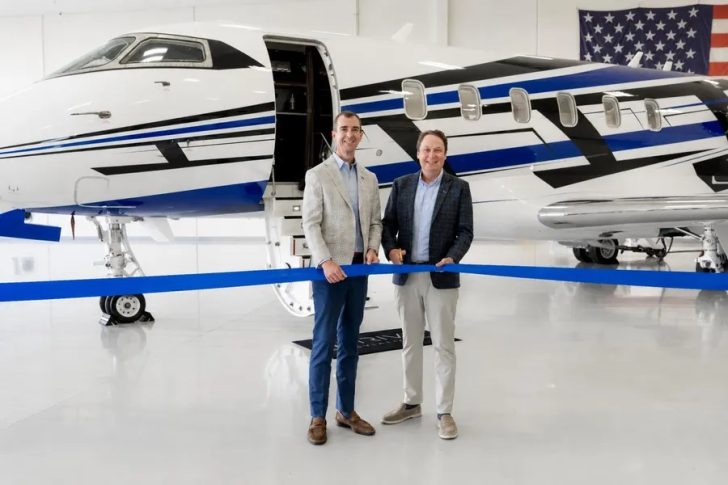
Market Watch / While the HondaJet HA-420 covers shorter regional trips, the Bombardier Challenger 3500 handles longer journeys that require more range, space, and passenger capacity.
The HondaJet can carry up to five passengers in the planned configuration. Its size makes it well suited to shorter business and leisure flights where using a larger private jet would add unnecessary operating costs.
The Challenger 3500 gives the program considerably more muscle. It can accommodate up to nine passengers and provides the cabin space and range expected from a modern super-midsize business jet.
Combining both aircraft could solve a common fractional ownership problem. Customers do not always need the same aircraft for every journey, so locking owners into one jet category can create costly mismatches between the aircraft and the actual mission.
Founded in 2018, the Las Vegas company operates more than 30 aircraft and is ranked as the 12th-largest U.S. private aircraft operator in 2025 based on charter and fractional hours tracked by ARGUS Traqpak.
Under the new structure, Arulean Air will acquire aircraft used by the fractional program. Thrive will manage the operational side, including flights and customer relationships. The first two aircraft have already arrived, including a Challenger 3500. Thrive expects to add roughly four to six HondaJet HA-420s and another two to four Challenger 3500s each year as customer demand develops.
Honda Takes Another Shot at Fractional Aviation
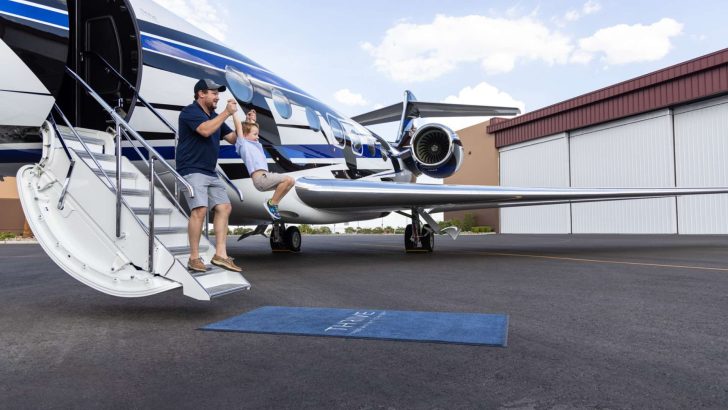
Jet Comparison / Previous fractional programs using the HondaJet have struggled, even as the wider U.S. fractional aviation sector recorded strong growth.
Jet It, Volato, and Jet AI all moved away from HA-420 fractional operations. Their exits created an awkward contrast with a market where U.S. fractional operator departures climbed sharply during the same broader period.
However, the aircraft itself was not the only issue. Building a national fractional operation requires far more than buying attractive jets. Operators need enough customers in the right locations, reliable maintenance support, careful scheduling, strong financing, and tight control over repositioning costs.
Honda now appears to be tackling that problem by working with an experienced operator. Thrive already has aircraft, crews, customers, operational systems, and a recognizable presence in private aviation. Honda does not need to create those capabilities from zero.
The arrangement resembles a strategy that has worked for other business jet manufacturers. Instead of depending heavily on young companies trying to prove a new fractional concept, manufacturers can work with established operators that already understand fleet economics.
Honda also has another reason to build a stronger operator relationship now. Its upcoming HondaJet Echelon could become an important part of the company's private aviation plans when the aircraft enters commercial service, currently expected around 2028 or 2029.